



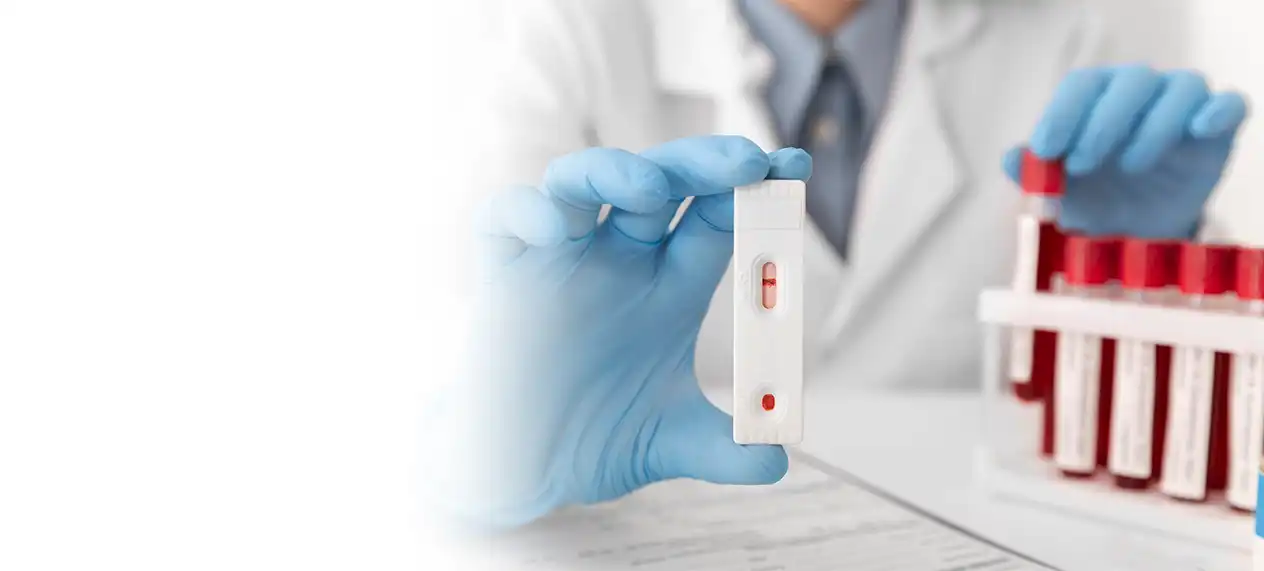
Cervical cancer is a type of malignancy that starts in the cervix, which is the narrow part of the uterus.1,32,000 new cases of cervical cancer are diagnosed every year in India. In fact, it is the third most common type of cancer affecting Indian women, accounting for nearly 18.3% of all female cancer cases in our country.
Most cases of cervical cancer are preventable. This is possible with the help of HPV vaccination, regular cervical cancer screening, including HPV tests and HPV DNA tests, and timely medical intervention.
Cervical cancer screening can help to detect the early traces of cancer. HPV test can help detect high-risk human papillomavirus that can cause changes in the cervical cells and increase the chances of cervical cancer. HPV DNA test, on the other hand, is a molecular test that can help to detect the traces of any genetic material associated with high-risk HPV.
Are you planning to undergo HPV screening as well?
It is quite natural to have questions about the procedure, how to prepare, the test results, and the costs involved. This blog will help you answer all the questions related to the procedure so that you can make an informed medical decision.
A human papillomavirus test is a simple screening test that helps to trace any high-risk types of viruses in the sample of cells collected from the cervix. This is the lower part of the uterus where it connects with the vagina.
Human papillomavirus is a very common group of viruses, and in many cases, the infection goes away on its own without causing any major health problem.
HPV DNA test is a screening test for cervical cancer. It helps to detect the DNA traces of high-risk human papillomavirus from a collected cervical cell sample.
Some tests may also help to identify the type of HPV, while others can help to figure out whether one or more high-risk types have been found.
Read Also: Cervical Cancer: Risk Factors And Prevention Methods
HPV DNA testing is important because it can help to identify high-risk strains of HPV even before there is any visible cellular damage or precancerous changes. It can support early intervention, reduce the likelihood of missed high-risk infections and help doctors determine whether additional tests or follow-up are necessary.
World Health Organisation guidelines for screening and treatment of cervical pre-cancer lesions for cervical cancer prevention recommend DNA-based HPV testing as a first-choice screening method.
Both HPV tests and a Pap test are screening tests for cervical cancer. Both use different techniques and are used to look for different things.
HPV test is used to detect any traces of high-risk HPV infection, whereas a Pap test is done to look for any cellular abnormalities that may indicate cancer.
| Feature | HPV test / HPV DNA test | Pap test |
| What it detects | High-risk HPV infection traces | Abnormal/unusual changes in cervical cells |
| Sample | The cell sample is collected from the cervix | The cell sample is collected from the cervix |
| Main purpose | This helps to identify high-risk human papilloma virus that can lead to cervical cancer | This helps to identify any Malignant or precancerous changes in the cell sample |
| Result | It helps to detect the presence or absence of HPV as well as to identify certain high-risk types | It helps to identify normal or unusual cellular changes |
| Role in screening | This is used as a primary screening test as per WHO | This can be used as a primary screening test as well as during follow-ups |
| Follow-up | Depends on HPV type, screening history and other findings | Depends on the type and severity of cellular changes |
Your doctor can even recommend an HPV and Pap smear test together. This is commonly known as co-testing.
According to the WHO guidelines, an HPV screening test is recommended for people with a cervix, belonging to specific age groups or risk categories.
| Population Group | Recommended Age | Screening Interval | Primary Test Type |
| Ages 21–29 | Age 21 | After every 3 years | Pap smear |
| Ages 30–65 | Age 30 | After every 5 years | HPV test alone or co-test with Pap |
| Age 65+ | N/A | No need if the tests are normal | None (if previously negative) |
| HIV-Positive / Immunocompromised | Age 25 | After every 3 to 5 years (Can be more frequent if doctor advises) | HPV or co-testing per doctor guidance |
A personalised screening and surveillance plan may also be recommended for people with a history of abnormal cervical screening test results in the past, as well as those with conditions that affect the immune system.
You may wish to discuss HPV screening with your gynaecologist if:
The HPV test is a simple procedure and can take about a couple of minutes. It involves the collection of cell samples from the cervix for laboratory analysis.
The first step of the process is to consult your doctor, who will ask about your medical history. This information helps your doctor to understand whether you Just need the routine screening or a more elaborate evaluation
In order to collect the sample, you will be required to lie down on the examination table with your knees bent. Doctors use a speculum to open the vagina and access the cervix for collection of the sample. You might feel slight discomfort, but there is no pain.
Once the doctor has a clear view, they use a small brush to collect a sample of tissues and cells from the cervix. The sample is then carefully stored and sent to the laboratory.
In the laboratory, the technicians use various molecular methods and techniques to detect any high-risk HPV genetic material. More detailed techniques may be used to detect the type of HPV.
Once your doctor has the results, they will explain the findings and help you understand what your next step should be, whether you need further evaluation or follow-up, or if you need any repeat testing.
Important
It is important to note that the time taken to receive the results may vary depending upon the laboratory, the hospital, the testing facilities, and the type of tests. There is no standard time for this.
Here are a few things that you need to keep in mind while preparing for an HPV test.
If your HPV test is negative, it means that there were no high-risk HPV types detected in your sample. A negative HPV test does not completely eliminate the future risks of cervical cancer. It does suggest that your risk of developing it is quite low.
If your HPV test is positive, it means that doctors have found one or more high-risk HPV types in your sample. While this does not necessarily mean that you have cervical cancer, it does put you at a high risk. It calls for the need for immediate medical intervention.
Following a positive HPV test result your doctor may recommend:
Both HPV 16 and HPV 18 are high-risk types and major contributors to cervical cancer cases. If either of the two has been detected, you need to immediately consult a doctor and take necessary measures.
If the test results are unsatisfactory or invalid, the sample may be collected again and analysed. Unsatisfactory results do not necessarily indicate cervical cancer.
An unsatisfactory result does not automatically mean that an abnormality or cancer is present.
Cost of an HPV test in India lies anywhere between 1,000 and 5,500 and varies depending on the hospital, diagnostic laboratory, testing method, as well as several other factors. These include:
The cost of an HPV DNA test in India is almost the same as that of an HPV test, and it is somewhere around ₹1,000 to ₹5,500. The best way to find out is to confirm it with the hospital before booking. You can also ask about sample collection, consultation, and any other important information to make the whole process hassle-free.
By now, you must have understood the importance of cervical cancer screening and how HPV tests and HPV DNA tests help in identifying the early signs of cancer. This not only helps in the early detection and prevention but also in the effective management of cervical cancer, thereby helping to improve the survival rates and overall quality of life.
If you are due for screening or have concerns about previous results, consult a qualified healthcare professional to determine the most appropriate next step.
Q1. What is an HPV test used for?
A: An HPV test is used to detect high-risk human papillomavirus types that are linked with cervical cancer.
Q2. Is an HPV DNA test the same as a cervical cancer test?
A: An HPV DNA test is a type of cervical cancer test that helps to detect dangerous HPV genetic material. This does not necessarily mean that the person has cervical cancer, but it only indicates a high risk.
Q3. Is an HPV test better than a Pap test?
A: Both the HPV test and the Pap smear test are used for the early detection of cervical cancer. These are different, and each has its own purpose. However, the World Health Organisation recommends the HPV test as the primary test for cervical cancer.
Q4. Does a positive HPV test mean I have cervical cancer?
A: No, a positive HPV test does not mean that you have cervical cancer. It, however, does suggest that you are at risk of developing it.
Q5. How long does an HPV test take?
A: HPV test involves two main steps: sample collection and sample evaluation. Sample collection only takes a couple of minutes, whereas the evaluation part may take longer, depending on the type of technique used, the hospital, and the diagnostic facilities available.
Q6. Is the HPV test painful?
A: HPV test is a well-tolerated procedure, and it is not painful. Some patients may, however, experience mild pressure, discomfort, or even spotting after sample collection.
References
Medical disclaimer: This article is for general educational purposes only and does not replace professional medical advice, diagnosis or treatment.
 +91-8440049999
 Careers
 Donate
 Book an Appointment
 Tele-Consultation
 Patient Portal


